
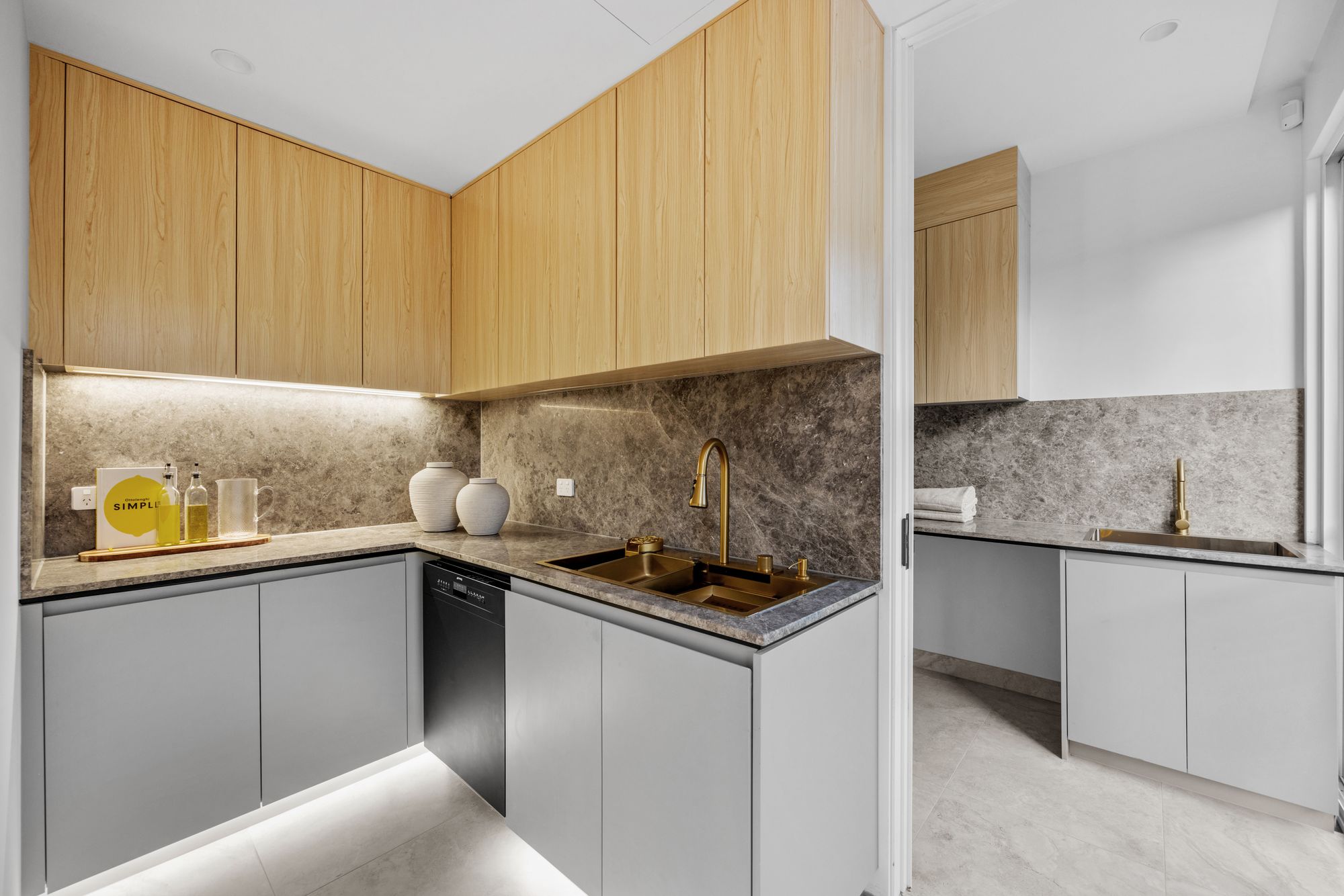
Does your stone benchtop need to match your cabinets? No. Chasing an exact match is the most common mistake Melbourne homeowners make.
What a benchtop and cabinetry need is compatibility: aligned undertones, a deliberate contrast level, and a clear decision about which surface leads. That slab that stopped you in the showroom can still work. You just need to test it the way a stonemason would, not the way a colour chart suggests.
Most Melbourne homeowners renovating a kitchen do not struggle to find a stone they love. The struggle is confirming that the stone actually works with the cabinetry they have chosen or planned. Matching a stone benchtop to cabinets is where confident renovation decisions either come together or unravel, and most of the advice available online either oversimplifies the decision or pushes rules that experienced stonemasons quietly ignore every day.
This guide is a decision-making resource, not a colour reference. If you are still choosing which stone colour to go with, start with Stonaa’s guide to stone benchtop colours first.
If you have a colour or two in mind and need to know how to make the pairing actually work, read on.
The One Rule That Controls Every Pairing Decision
Before any cabinet colour, stone type, or splashback material gets considered, one principle should anchor the entire decision. A stone benchtop and kitchen cabinetry must clearly contrast or clearly harmonise with each other. The pairing that consistently fails is the one that lands in the middle: two similar but non-matching neutrals that read as accidental rather than intentional.
Contrast creates visual energy and definition. A light stone against dark cabinetry, or a richly veined benchtop against calm, solid cabinet doors. The difference is deliberate, and the eye reads it as a design decision. Harmony creates cohesion and calm. A warm beige stone with warm timber cabinetry, or a soft white benchtop with off-white painted doors, the tones relate clearly, and the space feels resolved.
The mistake most homeowners make is choosing two neutrals that are close but not quite the same. Two slightly different greys. A warm white stone against a cool white cabinet. A greige benchtop next to a taupe door. Each element looks fine in isolation. Together, the pairing looks unfinished. Commit to contrast or commit to harmony, and the rest of the decisions become significantly easier.
Pairing Rules That Consistently Deliver Results
Within the contrast or harmony framework, a handful of principles guide every successful matching benchtop to kitchen cabinets decision. These are the rules experienced stonemasons and kitchen designers apply to every project:
Let the busier surface lead
If the stone carries strong veining or movement, the cabinetry should stay calm and solid. If the cabinetry has texture or grain – timber in particular – the stone should be quieter and more restrained. Two busy surfaces compete. One leads, one supports.
Match the room’s light, not the photo you saw online
Never judge a stone sample under harsh showroom spotlights. Natural daylight, the type of LED globes you choose, and even which way your kitchen faces will completely alter how your colour palette reads in real life. A benchtop that looks beautifully warm under retail lighting can turn cool and flat in a south-facing Melbourne kitchen. Always take your samples home and hold them up in the actual space-morning, noon, and night-before you make your final call.
Large surfaces set the tone; smaller surfaces can take risks
The benchtop is a large-format decision and should anchor the palette. The splashback and island front are smaller surfaces where bolder choices – a contrasting tile, a feature stone, a different finish – work without overwhelming the space.
Undertones must agree even when values contrast
Cabinetry with warm undertones – yellow, brown, or red – pairs best with stone that shares warm undertones. Cool cabinet tones pair with cool stone. Mismatched undertones are the most common reason a pairing that should work on paper looks wrong in the room.
Not Sure Your Pairing Works?
Cabinet Colour Pairings That Work in Melbourne Kitchens
White Cabinet Kitchens
A white cabinet creates a bright, open foundation that gives the stone benchtop genuine visual prominence. White cabinetry recedes and lets the stone do the work, which means the benchtop selection carries more weight in a white kitchen than in any other cabinet colour scenario.
Warm white and off-white cabinets pair beautifully with stones that carry beige, cream, or soft gold undertones – the warmth in both surfaces reads as intentional harmony. For a contrast-led approach, a white cabinet with a richly veined dark marble or a dramatic granite surface creates the kind of high-impact result Melbourne’s design-conscious homeowners consistently seek.
Dark Cabinet Kitchens
A dark cabinet in navy, charcoal, forest green, or black creates drama and sophistication – but only when the stone benchtop provides enough contrast to prevent the two surfaces from merging into an undifferentiated mass. Light stone against dark cabinetry is one of the strongest pairings in contemporary Melbourne kitchen design.
Bright white engineered stone, soft Calacatta marble, or a pale quartzite all deliver the contrast a dark cabinet needs. The key is undertone compatibility: a warm-toned dark cabinet pairs more naturally with a warm white or cream stone than with a cool, blue-grey white. Explore Stonaa’s engineered stone benchtops and marble benchtops ranges for dark cabinet pairings.
Timber Cabinets with Stone Benchtop
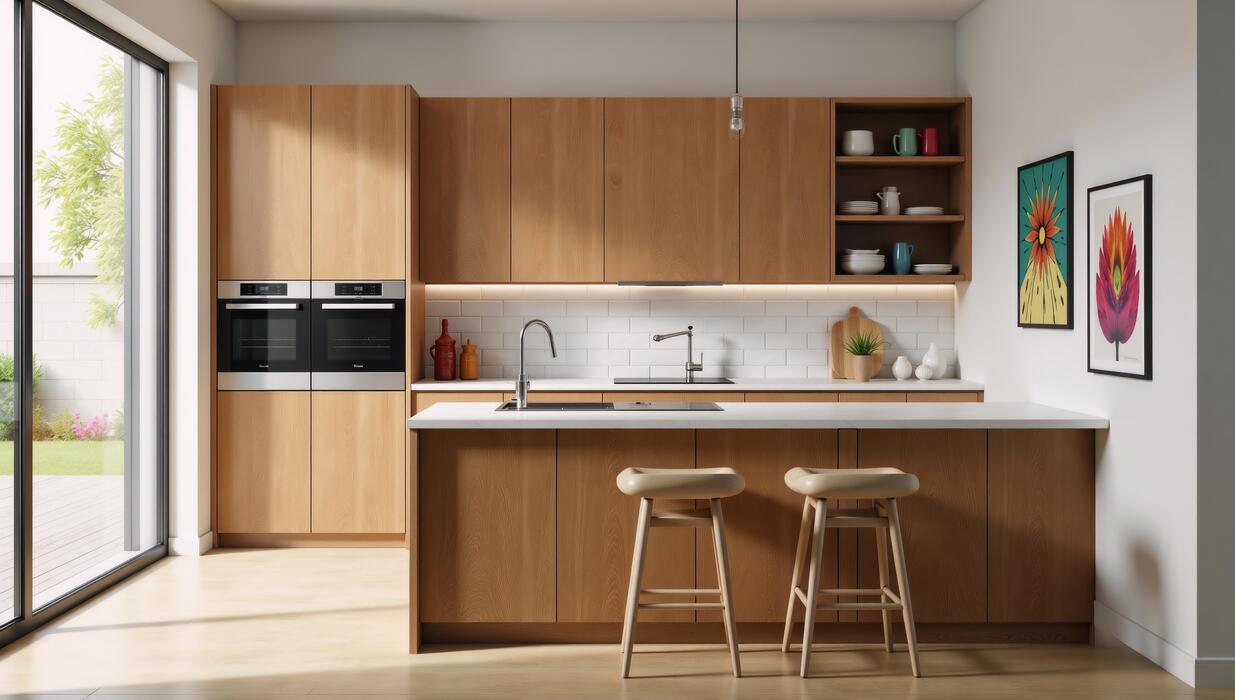
Timber cabinetry is the pairing scenario where the undertone rule matters most. Timber cabinets with a stone benchtop work best when the stone shares the warmth of the timber rather than fighting it. A light oak or Tasmanian oak cabinet suits stones with warm beige, cream, or soft gold veining – quartzite, dolomite, or a warm-toned engineered stone all read as natural companions to the timber grain.
A darker walnut or blackwood cabinet can handle a broader range of stone tones, including cooler options, because the depth of the timber anchors the space without needing the stone to carry warmth. The one pairing to avoid is a cool-toned grey stone against a warm honey-toned timber: the undertone clash reads immediately, and no amount of hardware or styling corrects it.
Getting the Splashback Right Too
Matching stone splashback, benchtop and cabinets into a cohesive whole is where many kitchen renovations either come together fully or fall apart at the final stage. The splashback connects the benchtop to the cabinetry vertically and sits in the line of sight every time someone stands in the kitchen. A splashback that clashes with either surface undermines a pairing that was working perfectly.
The most seamless approach is extending the stone splashback material up the wall in the same stone as the benchtop. Full-height stone creates an uninterrupted surface that reads as luxurious and intentional, and it removes the risk of a third material introducing undertone conflict.
For homeowners who want a contrasting splashback tile, the tile colour and undertone must relate clearly to either the cabinet or the benchtop, not split the difference between the two. A tile that sits equidistant between the cabinet colour and the stone colour creates the same muddy-middle problem that the contrast or harmony rule is designed to prevent.
Rules You Can Safely Ignore:
- The benchtop and cabinets must match exactly: Matching too closely produces a flat, tonally monotonous result. A pairing that clearly relates but does not replicate reads as more considered and more sophisticated.
- White kitchens need white stone: White cabinets support the widest range of stone colours precisely because white cabinetry recedes. A warm beige, a dramatic dark marble, or a strongly veined quartzite all work against white cabinets.
- Dark cabinets need dark stone: Dark cabinets and dark stone merge. The pairing loses definition, and the benchtop disappears visually. Light stone against dark cabinetry almost always produces a stronger result.
- You cannot mix warm and cool tones: Modern Melbourne kitchens mix warm and cool tones successfully every day. The condition is that the mix must be deliberate and managed, usually by letting one temperature dominate and using the other as an accent rather than a competing equal.
Frequently Asked Questions
1. Should my benchtop match or contrast with my cabinets?
2. Can I mix warm and cool tones in one kitchen?
3. My cabinets are already installed. Can stone fix a mismatch?
Stone selection can resolve a difficult cabinet colour by introducing a tone that either complements or deliberately contrasts the existing cabinetry. The splashback choice also plays a significant role in bridging a challenging pairing. Bring your cabinet door sample into the Stonaa showroom, and the team can work through the options with full slab comparisons against real samples.
4. Does the same rule apply to laundry and bathroom stones?
The contrast or harmony principle applies across every room. If the laundry or bathroom stone will share a sightline with the kitchen, as is common in open-plan Melbourne homes, the stones across both spaces should feel related even if they are not identical. Stonaa’s team regularly advises on whole-home stone selection to ensure visual cohesion across every room.
Ready to lock in your stone?
Why full-slab comparison matters more for this decision than for colour choice alone, and how consultations actually work for this specific question.
Let’s discuss!


