
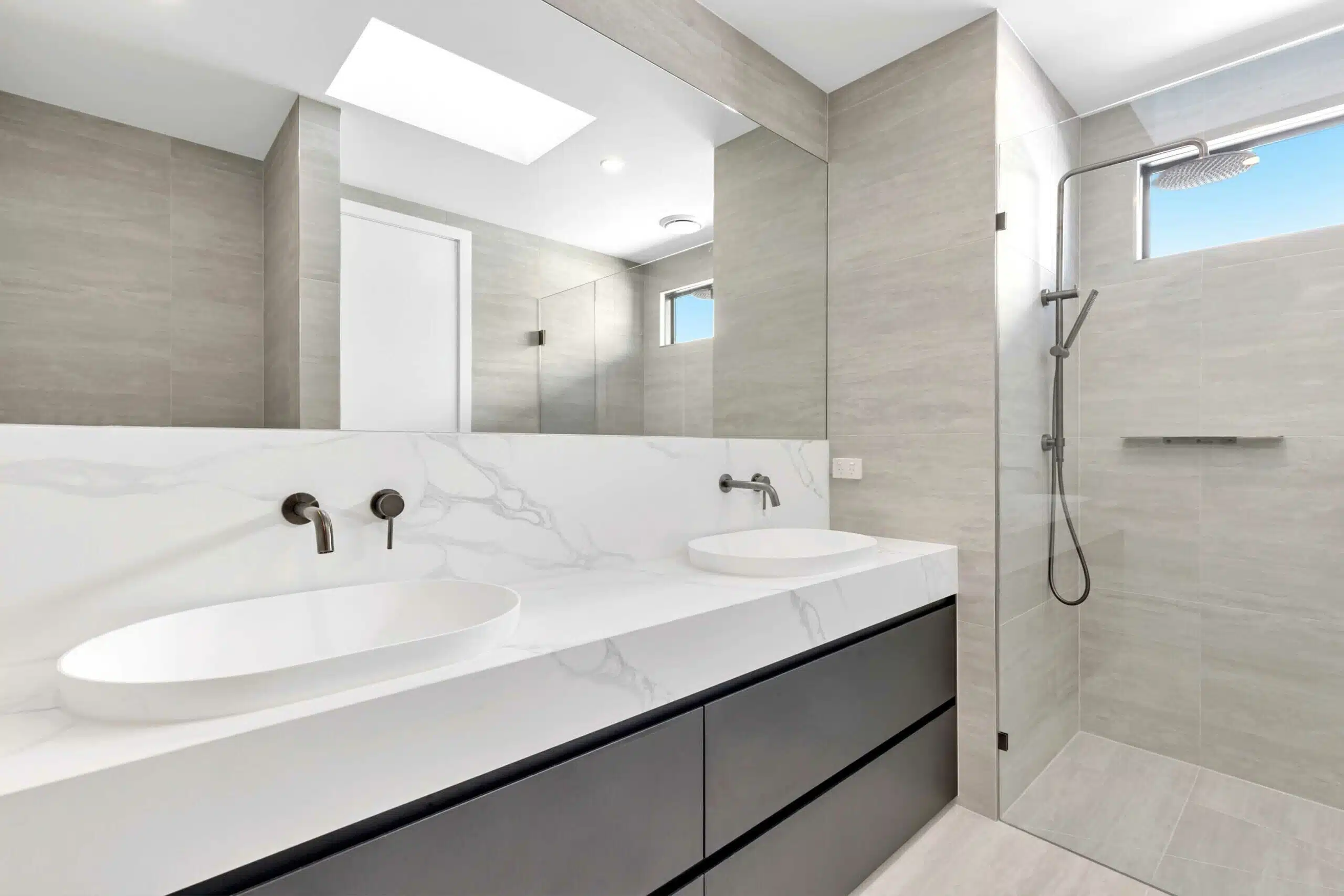
Why Bathrooms Are Actually Harder on Stone Than Kitchens
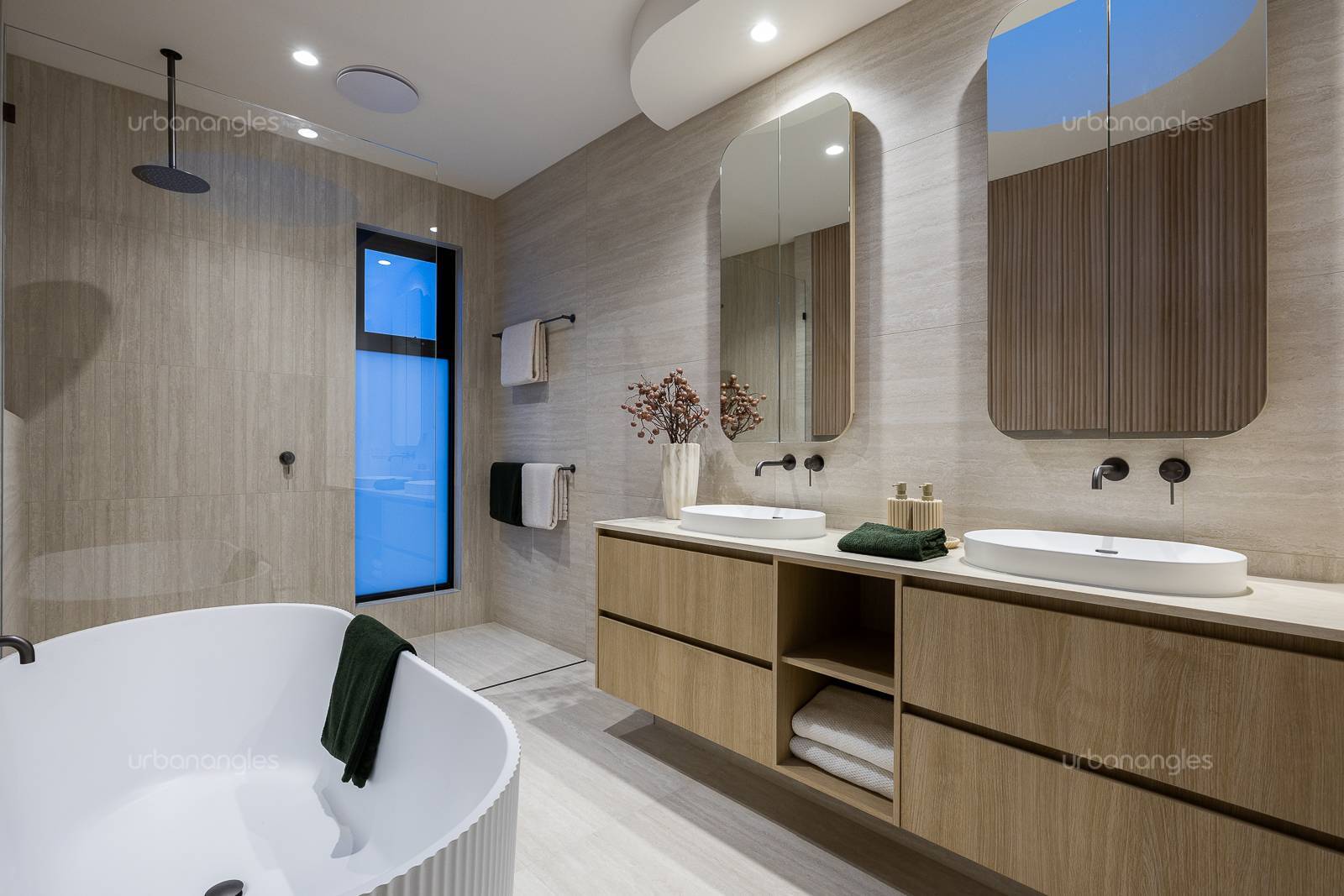
Most people assume kitchens are the toughest test for stone. Actually, bathrooms are harder.
Think about what happens there every single day. Water pools on the vanity surface constantly. Steam and humidity cycle up and down with every shower. And the products sitting on that surface? Toothpaste. Perfume. Makeup removers. Skincare acids. Acne treatments with benzoyl peroxide or salicylic acid.
These products are genuinely aggressive on certain stones. Marble reacts to them. Not dramatically, not overnight, but consistently over months and years. The surface dulls in patches. Small etch marks appear where nothing was ever spilled carelessly – just where a moisturiser bottle sat every morning.
This is something most stone guides skip entirely. We think it is one of the most important things to understand before choosing a bathroom vanity top material.
The Three Main Bathroom Countertop Materials
Silica-Free Quartz
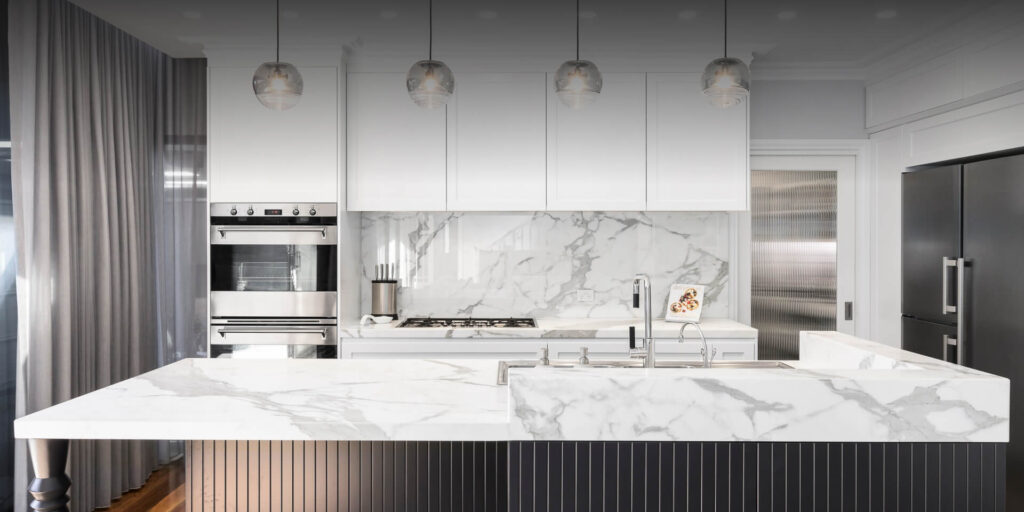
After July 2024, engineered stone manufacturing in Australia changed significantly. The federal ban on engineered stone containing more than 1% crystalline silica was a direct response to a silicosis crisis affecting Australian stonemasons. Silica-free quartz is the compliant version – same engineered format, none of the harmful silica content.
It is non-porous. It never needs sealing. Moisture, humidity, and most household chemicals leave it completely unfazed.
Key strengths:
- No sealing required, ever
- Consistent, uniform patterning across the full surface
- Excellent resistance to staining and moisture
- Very low long-term maintenance
But here is the trade-off. It is engineered. There is no natural depth, no mineral movement, no variation between slabs. For homeowners who want performance above all else, that is a completely fair exchange. For those who want a surface with genuine character, it is not enough.
Marble
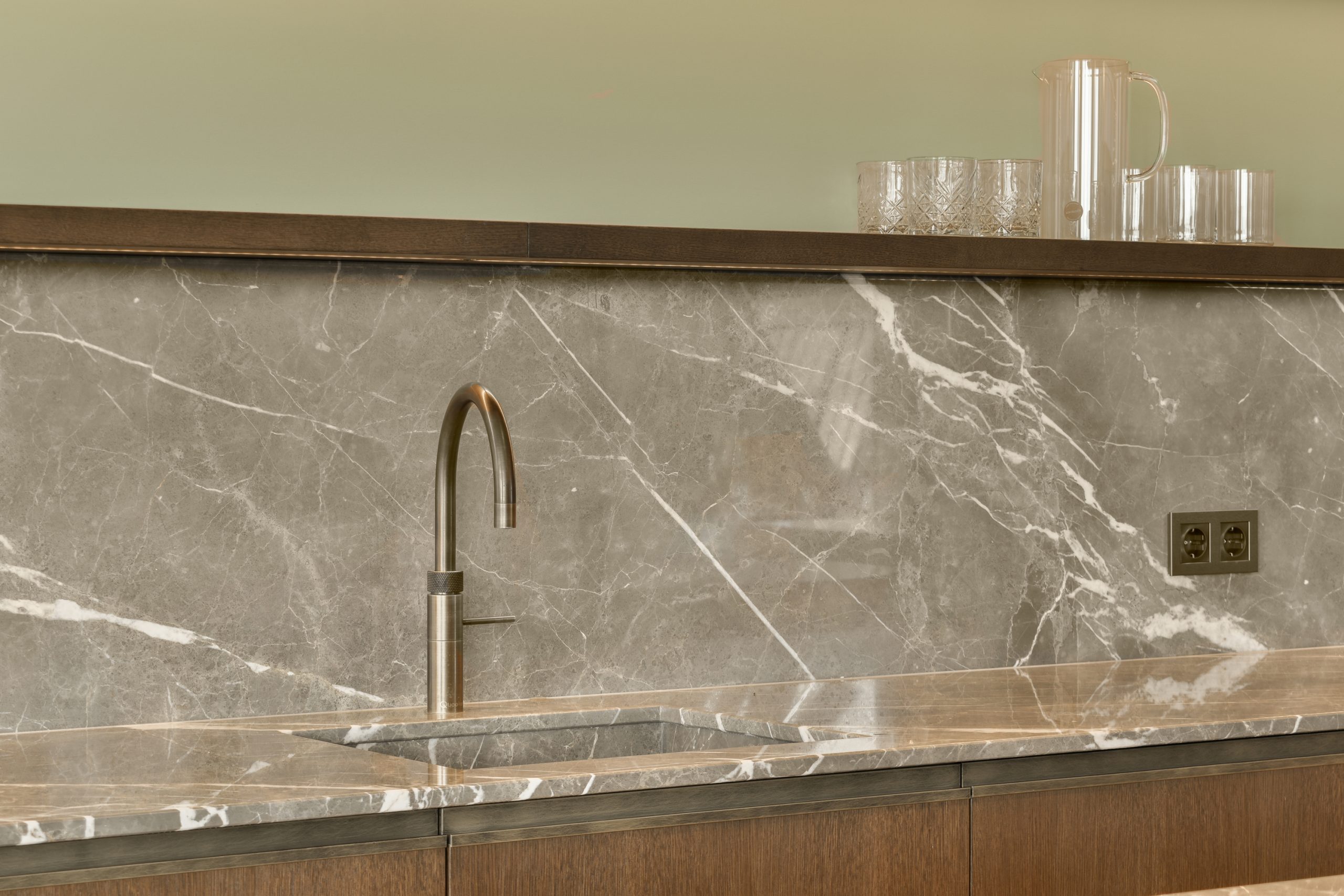
Nothing else looks like marble. That is just true.
Calacatta, Carrara, Statuario, Arabescato – Melbourne’s most admired en-suite renovations keep coming back to these varieties. The veining, the luminosity, the way it catches light differently at different times of day. No engineered surface gets close.
But marble asks something in return. It is calcium-based and reacts to acids. The skincare products and cleaning sprays mentioned earlier genuinely affect it over time. Sealing every six to twelve months is non-negotiable. Spills need to be wiped immediately.
Key strengths:
- Visual luxury that no engineered surface replicates
- Every slab is completely unique
- Pairs beautifully with brushed brass, matte black, and warm timber
- Strong resale appeal across Melbourne’s premium suburbs
- Develops a natural patina over time
Marble suits homeowners who go in with their eyes open. Know what it needs. Decide if that works for your life. Then commit fully.
Granite
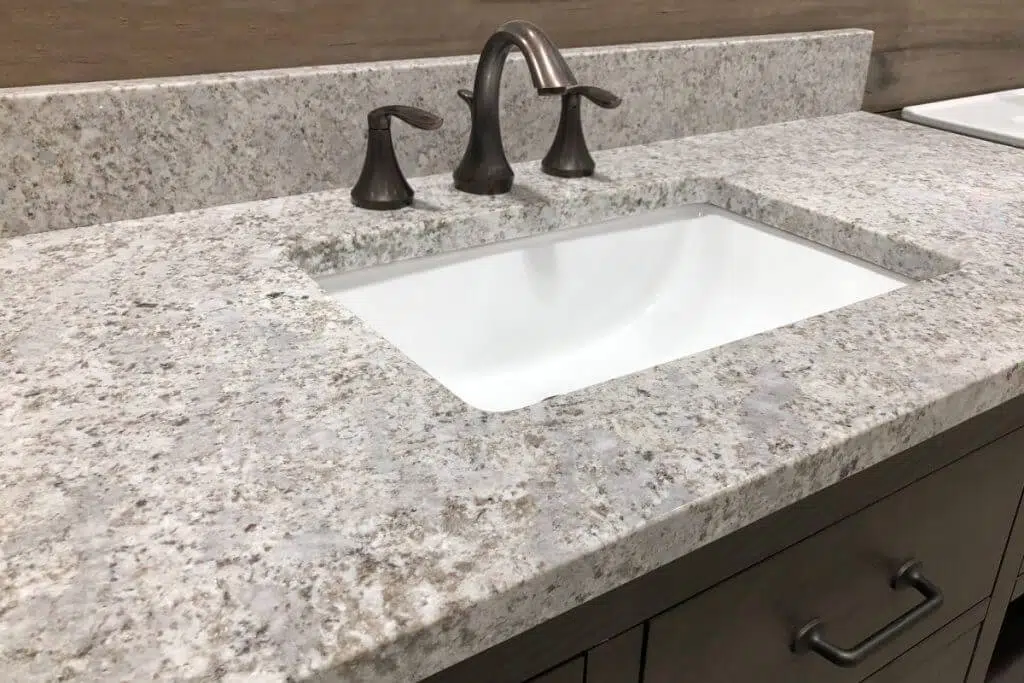
Granite is genuinely underrated. It rarely gets the editorial attention marble does, but in terms of real-world bathroom performance, it consistently outperforms both alternatives.
It sits at 6 to 7 on the Mohs hardness scale. Heat does not bother it. Scratches are almost impossible under normal use. Acidic bathroom products barely register. And unlike engineered stone, every granite slab carries natural mineral movement and tonal variation that makes each installation genuinely individual.
Key strengths:
- Outstanding hardness and scratch resistance
- Highly resistant to moisture and heat
- Far less reactive to acidic products than marble
- Natural variation and character in every slab
- Annual sealing keeps it protected long term
For Melbourne family bathrooms that run hard every day, granite is often the smartest choice in the room.
How to Choose the Right Material for Your Bathroom
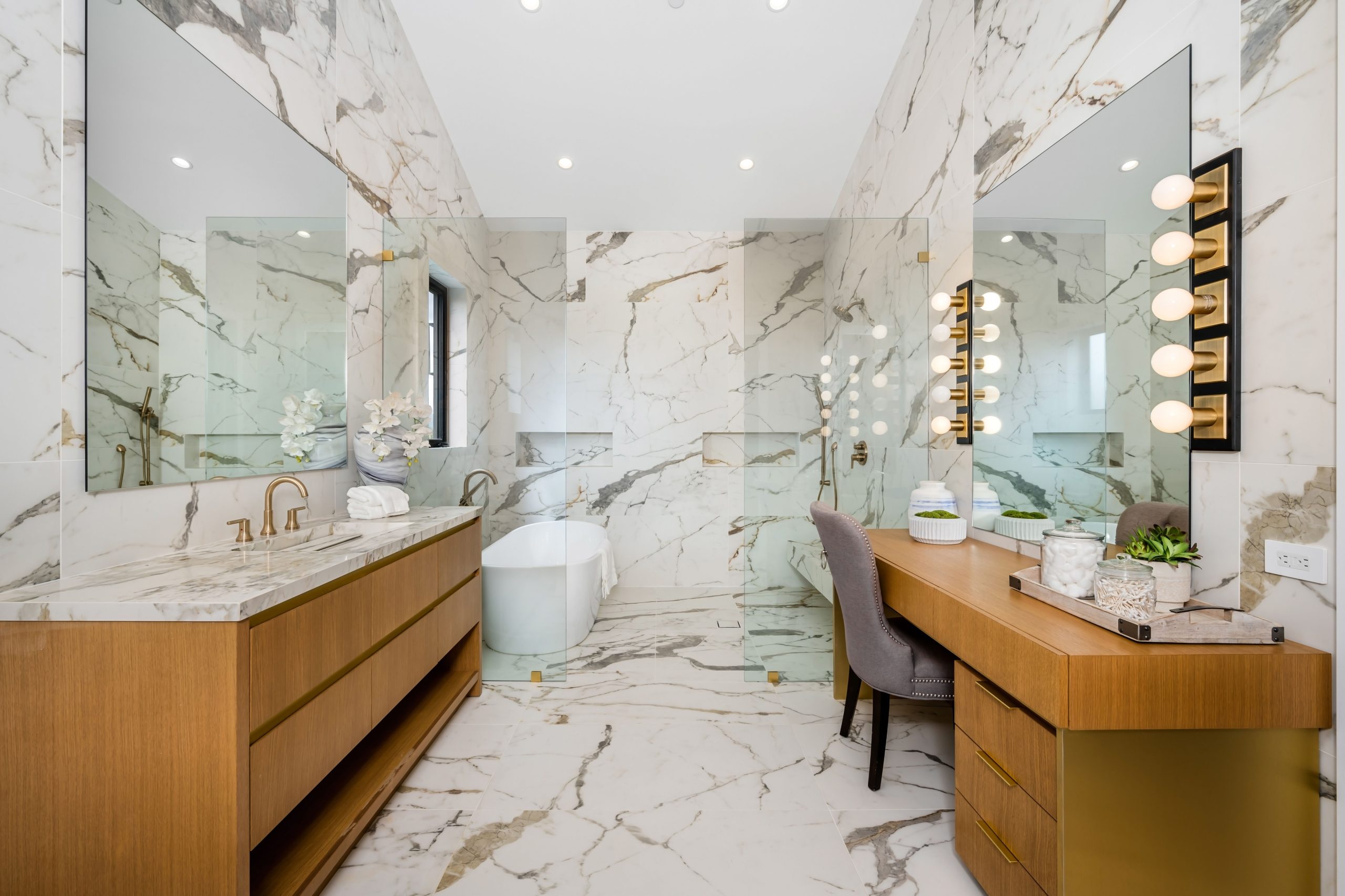
Different bathrooms genuinely call for different stones. Here is how we think about it.
Master en-suites in Brighton, Hawthorn, or South Yarra
- Marble: The usage is typically lighter and more considered. The maintenance expectation fits the lifestyle. And the luxury finish is exactly what buyers in those markets recognise and value.
Busy family bathrooms that are used many times a day
- Granite. It handles everything a busy household throws at it without requiring constant attention. Lower maintenance than marble and more character than engineered stone.
Powder room or guest en-suite
- Marble again. Light traffic, occasional use, and the visual impact is immediate. Guests notice it. It makes an impression. And because it sees minimal daily product exposure, the maintenance reality is manageable.
Inner Melbourne apartment
- Silica-free quartz is worth a serious look. Smaller surfaces, higher ambient humidity, and a strong case for zero-maintenance performance make the practical advantages genuinely compelling.
One thing we always tell homeowners at Stonaa: view the full slab under natural light before you commit. Not a sample. The actual slab. Small samples do not show how stone moves and shifts across a full vanity surface. That one step prevents most of the regretful conversations we have had over 20 years.
Are Stone Vanity Tops Actually Worth It
Yes. But only when chosen correctly for the space.
Laminate and ceramic tile have their place in budget renovations. But stone outlasts, outperforms, and out-values them across every metric that matters long term.
Australian homeowners typically see a 50 to 70 per cent return on a well-planned bathroom renovation. Premium finishes consistently outperform budget alternatives at resale. In Melbourne’s property market, a professionally installed luxury bathroom stone benchtop is one of the few renovation investments that buyers factor directly into their offers.
A well-maintained marble or granite surface installed today will still be performing in 30 years. Most alternatives will not get close.
